
Desk note · company · Ola Electric / EV
Ola Electric set a ₹27 rights issue price on 8 October 2026 to raise about ₹1,000 crore, roughly four months after a ₹780 crore institutional round. Shareholders must subscribe, sell their rights, or accept dilution when the issue opens on 22 October.
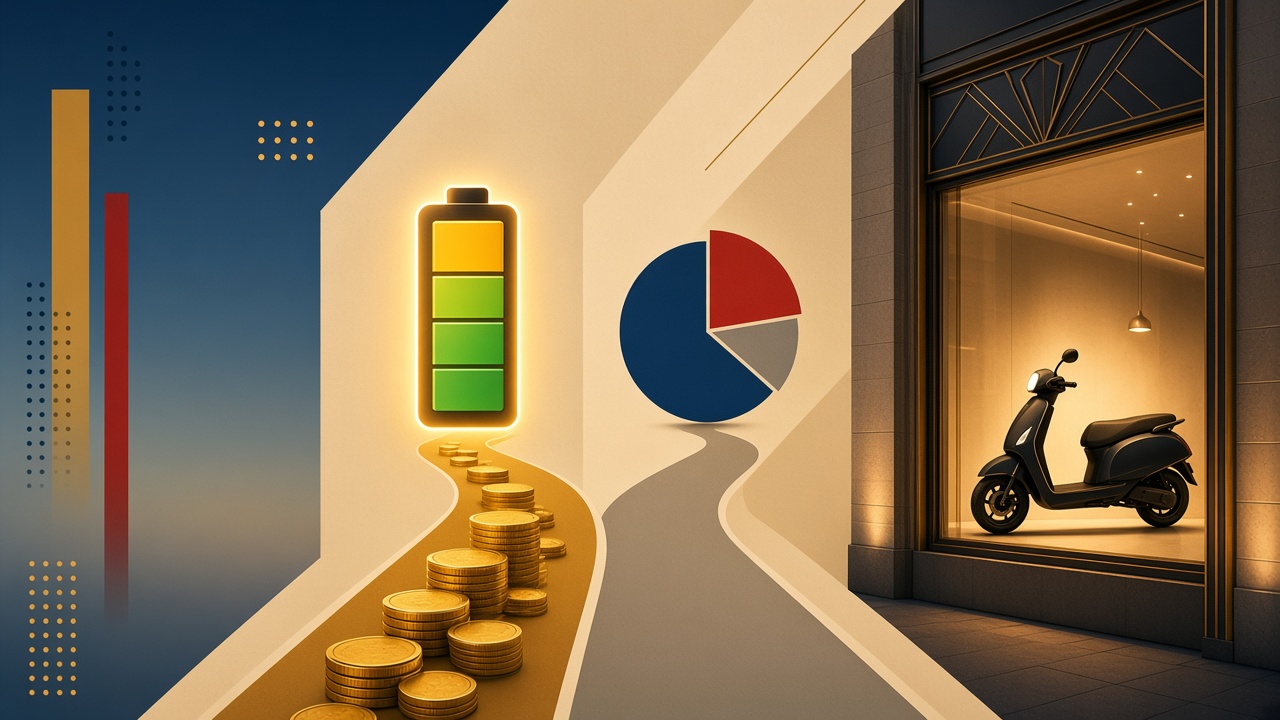
On 8 October 2026, Ola Electric finalised terms for a ₹1,000 crore rights issue. Eligible shareholders get two new shares for every 25 they hold at ₹27 each. The record date is 13 October. The issue opens on 22 October and closes on 30 October. The price sits below the previous day’s market close, so investors face a familiar rights choice: put in more cash, sell the entitlement, or do nothing and let ownership shrink.
Rights issues are a way to raise equity from people who already own the stock. Ola said about ₹350 crore will repay debt and about ₹400 crore will fund research, manufacturing, and sales infrastructure. The rest of the proceeds depend on how much call money shareholders pay over time. The fundraising follows a ₹780 crore institutional round in June. Two capital calls in one year signal the business still burns cash while it fights for scooter market share.
June-quarter revenue fell sharply year on year even as the net loss narrowed. Operating cash outflow widened. September registration data put Ola near 6.5% of India’s electric two-wheeler market, behind TVS, Bajaj, Ather, and Hero. Founder Bhavish Aggarwal pledged shares to fund his own rights subscription, which keeps control but adds scrutiny.
If you hold Ola shares, read the letter of offer before the record date. Subscribing protects your stake but sends more money into a company that is still losing cash. Selling rights entitlements captures some value without subscribing. Letting rights lapse is the cheapest option today and the most dilutive tomorrow. If you only follow EVs as a buyer, the rights issue does not change showroom prices immediately. It does show how much capital the company needs while volumes remain well below last year’s peaks.
Trade policy / exports
Commerce minister Piyush Goyal said on 22 October 2026 that India’s proposed free-trade agreement with the European Union could become operational within four to five months after signing, with the deal expected to be inked before year-end during his visit to Germany.
Food delivery / quick commerce
Swiggy reported on 22 October 2026 that September-quarter revenue rose 36% to about ₹7,571 crore and the consolidated net loss narrowed to ₹922 crore, as food delivery posted record adjusted core profit of about ₹349 crore while quick-commerce Instamart lost about ₹764 crore at the segment level amid heavier discounting and 69 new dark stores.
Quick-service restaurants / consumers
KFC and Pizza Hut operator Sapphire Foods India said on 22 October 2026 that September-quarter consolidated restaurant sales rose 20% year on year to about ₹885 crore, with KFC India same-store sales up 14% and adjusted EBITDA margin expanding 100 basis points to 7.1% even as the listed stock remained far below its 52-week high.
RBI / government borrowing
On 22 October 2026, the Reserve Bank of India accepted no bids at the scheduled sale of short-dated government treasury bills, the first full cancellation in about seven months, as investors demanded higher yields amid a bond selloff, oil-linked inflation fears, and expectations of more rate hikes after October’s policy minutes.
For informational purposes only. Not investment advice. Verify with filings and a licensed adviser.