
Desk note · industry · Steel / industrial policy
Late on 10 October 2026 the steel ministry released a draft national steel policy for public comment. It aims to lift installed capacity from about 220 million metric tons today to 604 million by 2047 while cutting average emissions intensity and locking in iron ore and coking coal supply.
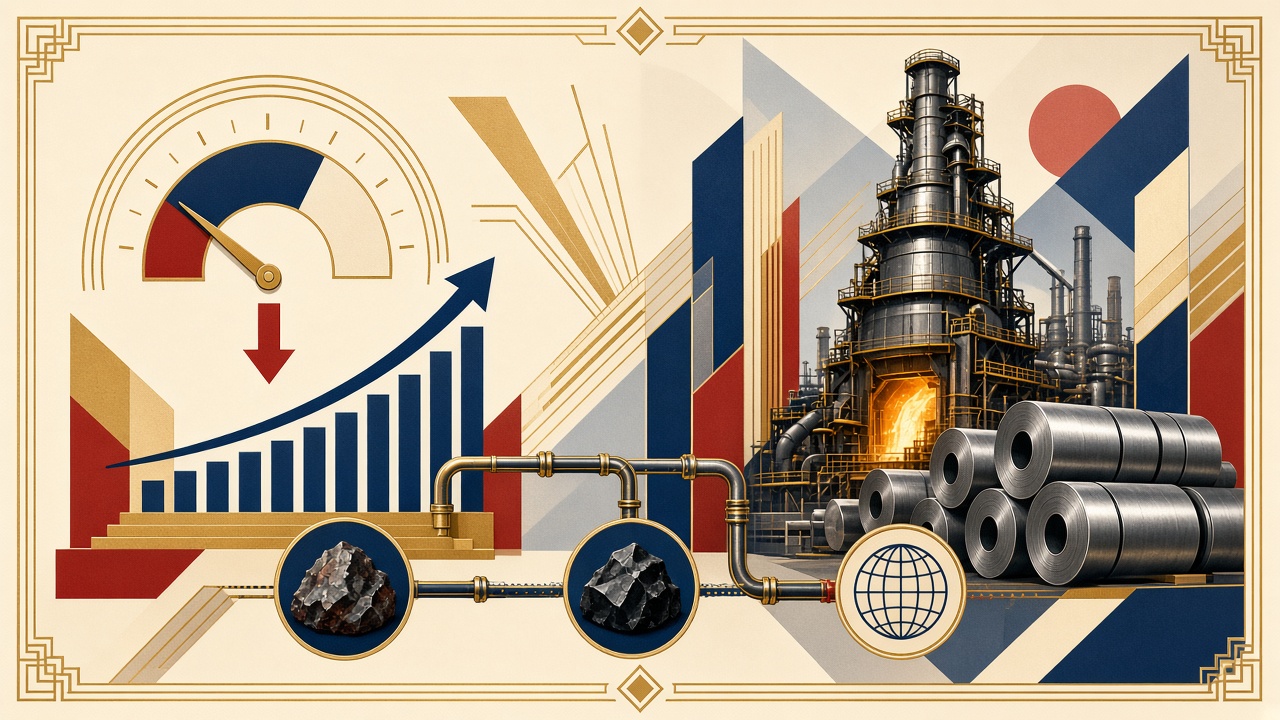
India published a draft national steel policy for consultation on the night of 10 October 2026. The document sets a capacity goal of 604 million metric tons by 2047, up from about 220 million tons at present. It also sketches how the sector should meet demand while lowering emissions. Average carbon intensity would drop to around 1.54 tonnes of carbon dioxide per tonne of crude steel by 2047, from 2.54 tonnes today, aligning with India’s 2070 net zero target. On raw materials, the ministry expects iron ore demand to reach 772 million tons and coking coal demand 236 million tons. The draft calls for securing high-grade ore at home, pursuing foreign assets, and joint ventures, plus diversifying coking coal imports through strategic outreach abroad.
Steel sits at the centre of infrastructure, autos, and defence build-out. A near-tripling of capacity over two decades signals that planners expect sustained domestic demand, not a pause after the current cycle. The policy is still a draft, so numbers can change after industry feedback. Even so, it tells miners, ports, and power utilities where long-term bets may land. The emissions target pushes mills toward cleaner blast furnaces, scrap use, and efficiency upgrades rather than adding capacity at today’s carbon intensity. Coking coal remains imported for most Indian blast furnaces, so overseas mine stakes and shipping lanes become part of industrial security, not just corporate strategy.
If you buy a home, a car, or appliances, steel input costs feed into those price tags over time. If you work in construction, autos, or mining, capacity additions can mean more orders but also more competition on margins. Watch the final policy text after consultation, state clearances for new plants, and whether global coal and ore prices cooperate with the import plan. This is a long-dated industrial roadmap, not a quarterly earnings surprise.
Trade policy / exports
Commerce minister Piyush Goyal said on 22 October 2026 that India’s proposed free-trade agreement with the European Union could become operational within four to five months after signing, with the deal expected to be inked before year-end during his visit to Germany.
Food delivery / quick commerce
Swiggy reported on 22 October 2026 that September-quarter revenue rose 36% to about ₹7,571 crore and the consolidated net loss narrowed to ₹922 crore, as food delivery posted record adjusted core profit of about ₹349 crore while quick-commerce Instamart lost about ₹764 crore at the segment level amid heavier discounting and 69 new dark stores.
Quick-service restaurants / consumers
KFC and Pizza Hut operator Sapphire Foods India said on 22 October 2026 that September-quarter consolidated restaurant sales rose 20% year on year to about ₹885 crore, with KFC India same-store sales up 14% and adjusted EBITDA margin expanding 100 basis points to 7.1% even as the listed stock remained far below its 52-week high.
RBI / government borrowing
On 22 October 2026, the Reserve Bank of India accepted no bids at the scheduled sale of short-dated government treasury bills, the first full cancellation in about seven months, as investors demanded higher yields amid a bond selloff, oil-linked inflation fears, and expectations of more rate hikes after October’s policy minutes.
For informational purposes only. Not investment advice. Verify with filings and a licensed adviser.