
Desk note · industry · Cybersecurity / payments
CERT-In warned payment firms about hijacked payout approvals
India's Computer Emergency Response Team said on 20 November 2026 that fraudsters altered business records or approver relationships at banking, fintech, and government-linked payout platforms before routing money through legitimate payment rails, and flagged AI-driven attack frameworks used across sectors.
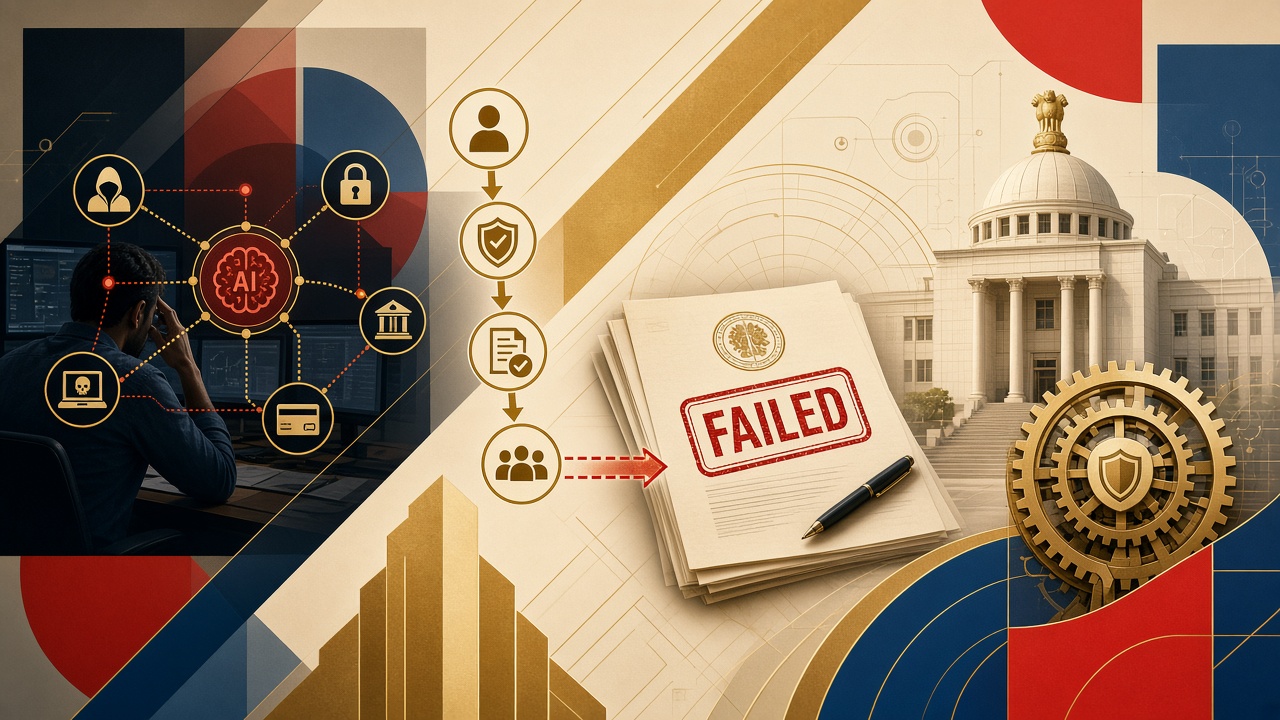
- •A CERT-In advisory on 20 November 2026 said unauthorised transactions were reported at service providers for banks, non-bank lenders, and technology vendors supporting government-linked payments.
- •Attackers changed master data or approval hierarchies, then used normal payment workflows to move funds; the agency did not quantify losses.
- •The notice also cited AI-driven attack frameworks and asked government bodies, payout platforms, and tech vendors to tighten controls.
What's going on here?
Payment fraud in India often starts inside systems that already passed know-your-customer checks, because crooks edit who can sign off rather than break encryption on the wire. The national cyber agency CERT-In issues advisories when it sees patterns across multiple institutions. On 20 November 2026 it said unauthorised transactions had surfaced at service providers supporting banks and non-bank financial firms, and at technology vendors that run government-linked payout stacks. The advisory said attackers altered business records or approval relationships and then pushed payments through legitimate channels. It did not name victims or cite a rupee loss. The same notice pointed to AI-driven attack frameworks appearing in incidents across sectors, building on earlier warnings this month that named specific hacking tools linked to financial raids. Reserve Bank of India supervisors have been pressing lenders to prove cyber resilience after a run of incidents at digital lenders and smaller banks.
What does this mean?
When fraud rides on valid user accounts, regulators focus on segregation of duties, maker-checker rules, and logging around master-data changes, not only on SMS one-time passwords. Fintech aggregators and payout gateways that sit between ministries and beneficiaries inherit the same scrutiny as core banking because a single tampered approver list can release thousands of small transfers. AI-assisted reconnaissance can speed up social engineering and script generation, so incident response teams need playbooks that assume partially automated attacks. CERT-In's recommendations to government organisations and non-financial payout platforms widen the audience beyond listed banks. Compliance teams should map which APIs can change payee directories or dual-authorisation matrices without a secondary human check.
Why should I care?
If you run vendor payouts or salary files through a fintech connector, ask for audit trails on approver changes and test whether a compromised admin account can add a payee in one session. Corporate treasurers should keep call-back verification for new beneficiaries even when payments originate inside enterprise resource planning software. Investors in payment stocks should read cyber disclosures in quarterly risk factors for spikes in operational losses. Watch follow-on RBI directions, named enforcement actions if CERT-In identifies victims, and whether insurers tighten cyber policies for payout platforms.
More desk notes
Electric vehicles / charging policy
Twelve charger networks now sit on one national EV payment platform
The Ministry of Heavy Industries said on 20 November 2026 that about twelve charging operators are live on the Unified Bharat e-Charge pilot across five states, with NPCI BHIM Services and BHEL developing the shared discover-and-pay layer and officials planning a wider rollout once reliability improves.
Capital markets / governance
SEBI wants shorter careers for exchange bosses and public directors
A Securities and Exchange Board of India consultation paper released on 20 November 2026 proposes lowering the maximum age for public interest directors on exchanges to 70 from 75, capping managing-director tenure at eight years at one market infrastructure institution and twelve across institutions, and letting the AMFI chief join the AMC Repo Clearing board as capital needs rise.
Health insurance
IRDAI fined Star Health Rs 2 crore for Covid claim cuts
The Insurance Regulatory and Development Authority of India imposed a Rs 2 crore penalty on Star Health and Allied Insurance on 20 November 2026 after inspections found Covid-related health claims declined or trimmed on untenable grounds, with policyholders often not told which policy clause justified the decision.
Consumer electronics / handsets
Festive smartphone units fell 22% while average prices climbed 28%
Counterpoint Research said on 20 November 2026 that India's smartphone unit sales fell about 22% year on year during the festive season as memory inflation lifted device prices and narrowed discounts, leaving value largely flat because shoppers who needed a phone still bought on EMI while many others delayed upgrades.
For informational purposes only. Not investment advice. Verify with filings and a licensed adviser.